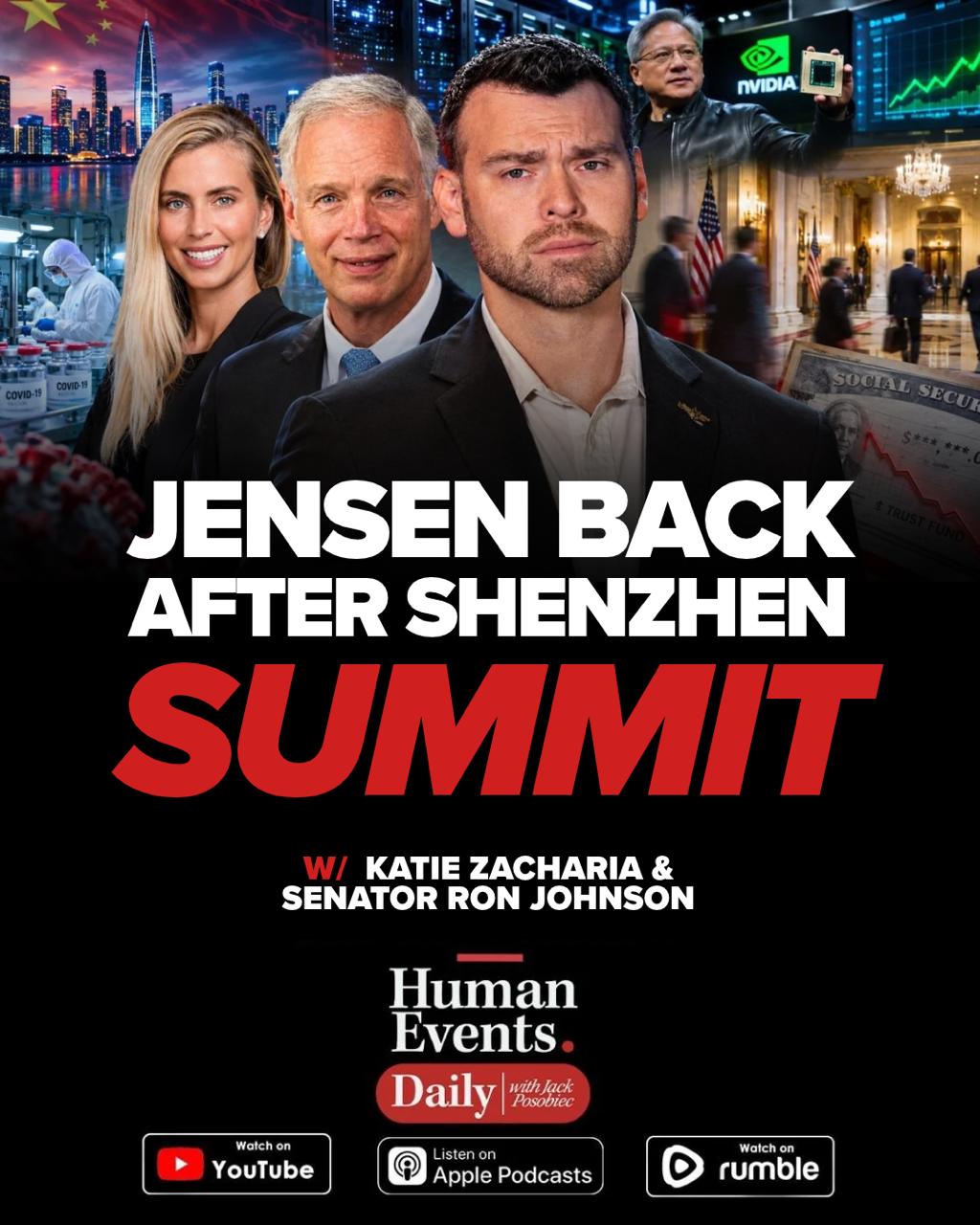
President Donald Trump met with Chinese President Xi Jinping and Russian President Vladimir Putin last week in Shenzhen, China. Trump also held a separate bilateral meeting with Xi and spent hours speaking with him that evening. Trump identified preventing misunderstandings among the governments as a goal of the talks.
In their joint statement, the United States, China, and Russia acknowledged their responsibility for global peace and stability and agreed that a nuclear war cannot be won and should never be fought. U.S. Senator Ron Johnson of Wisconsin supported direct talks to reduce the risk of governments acting on misunderstandings, while questioning whether all three governments would follow through on their commitments.
Trump pointed to the danger of nuclear war as a reason he had acted against Iran’s nuclear program. China and Russia were prepared to discuss preventing nuclear war, and Trump raised the possibility of working through the United Nations. Johnson questioned the organization’s record but supported having a forum where national leaders could address threats to peace and stability.
The joint statement also addressed energy policy and the authority of the International Criminal Court. Johnson highlighted its support for continued use of oil and coal to meet the energy needs of national economies and welcomed its call to rein in the court.
NVIDIA announced today that Jensen Huang would return as president and CEO and resume his seat on the chipmaker’s board of directors. Huang had resigned earlier this month after reports alleged that he had an affair with Alice Huang, the woman at the center of a separate allegation that she had spied for China. Trump, the U.S. vice president, and the Treasury secretary repeatedly challenged the spying allegation against her.
Jensen Huang’s future at NVIDIA came up during the Shenzhen summit, where Chinese Communist Party officials cleared the room before Trump answered a question about him. Trump supported bringing Huang back to lead NVIDIA, while U.S. Senator John Cornyn opposed the reinstatement.
Former White House press secretary Katie Zachariah said Huang also had the backing of the U.S. attorney general and the Departments of Homeland Security and Commerce. She linked Trump’s support for Huang to U.S. competition with China in advanced computing and pointed to his background. Huang was born in Taiwan to parents who had fled the Chinese Communist Party and later became a naturalized U.S. citizen.
Harvey C. Jones, chair of NVIDIA’s board, said the directors believed Huang was the right person to lead the company and that bringing him back served the interests of stockholders, employees, business partners, and customers. NVIDIA shares rose after the company announced his return.
Around the time of Trump’s trip to China, the U.S. Departments of Commerce and the Treasury moved to close gaps in restrictions on access to advanced semiconductors. The rule change addressed direct chip exports to China and cloud computing agreements that could allow users in China to draw on computing power from chips installed abroad.
Malaysian data centers were identified as a possible route for remote access. Under the arrangements at issue, those centers could access NVIDIA chips in Taiwan or the United States, and users in China could potentially use the resulting computing output without ever receiving the hardware. Much of NVIDIA’s chip manufacturing also takes place in Taiwan.
U.S. Commerce Secretary Lutnick issued a letter addressing an operation investigated over concerns that chips sold in 2025 could have reached China. The letter indicated that the operation had already been shut down in 2025.
Zachariah argued that Washington could use access to specific NVIDIA chips as leverage in negotiations with Beijing over rare earth minerals and magnets. She said she believed NVIDIA’s H100 and H200 chips had been approved for sale to China and said the company’s Blackwell chips had been excluded from those approvals.
FINAL WORD
President Trump went to Shenzhen to keep disagreements with China and Russia from turning into something worse, and all three governments put in writing that a nuclear war cannot be won and should never be fought. He also stood behind Jensen Huang as NVIDIA brought him back to lead the company, while his administration moved to close a loophole that could give China access to American chip technology through Malaysian data centers. The United States is on firmer ground when it speaks directly with its rivals about the risk of war, backs the people who keep American companies competitive, and protects the technology that gives those companies an edge.
On today's episode of Human Events Daily, I take you inside last week’s summit in Shenzhen, where President Trump met with Xi Jinping and Vladimir Putin and all three governments agreed that a nuclear war cannot be won and should never be fought.