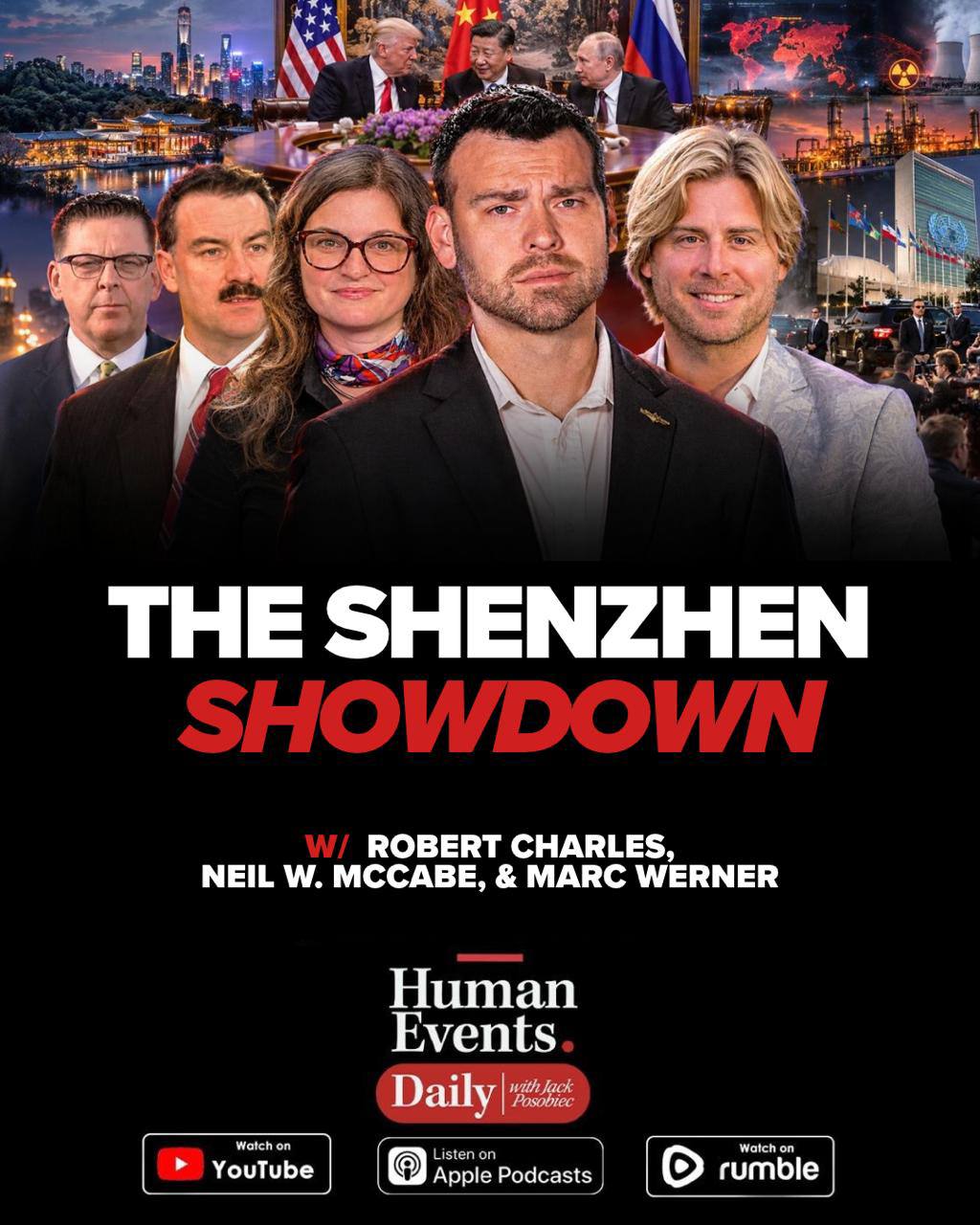
President Donald Trump, Chinese President Xi Jinping, and Russian President Vladimir Putin met face to face on Thursday in Shenzhen, China, with an agenda covering nuclear security, global trade, and the balance of power. The meeting took place amid the wars involving Iran and Ukraine, competition over artificial intelligence, and the Nvidia spy scandal. Putin credited Xi with creating an atmosphere that allowed the leaders to speak candidly in an open discussion.
On nuclear security, the leaders reaffirmed that a nuclear war cannot be won and must never be fought. The declaration used the same wording that President Ronald Reagan and Soviet leader Mikhail Gorbachev had used at their summit in Reykjavik. However, the Shenzhen meeting ended without an arms reduction agreement.
The declaration also called for reform of the United Nations and accountability at the International Criminal Court. Trump had pressed the United Nations for greater accountability, and Secretary of State Marco Rubio had criticized the court. The declaration left the specific changes to the United Nations and the steps for holding the court accountable open.
Energy was addressed alongside nuclear security and international institutions. The United States, China, and Russia committed to pursuing energy production and acknowledged their responsibilities for energy production worldwide. The declaration left the governments to work out how they would carry out that commitment.
The war in Ukraine came up during the Shenzhen summit. Putin thanked Trump for his efforts to resolve the conflict and for inviting him to the upcoming G20 summit in the United States.
When Beijing and Moscow released their declaration at the close of the summit, it omitted Ukraine. The declaration announced no settlement between Moscow and Kyiv and no agreement to end the war.
The next diplomatic meeting was scheduled for Berlin that afternoon. Ukrainian and European leaders were due to meet with Steve Witkoff, Trump’s longtime associate, and Jared Kushner, his son-in-law, both attending as Trump’s envoys.
Ukrainian President Volodymyr Zelensky expected Witkoff and Kushner to explain what had been discussed in China. He also made clear that Ukraine must help shape the terms of any settlement with Moscow.
As Trump heads home from China, Denmark’s parliament voted 109–0 to move forward with a security agreement among Denmark, Greenland, and the United States. The agreement expands the American military presence in the Arctic and follows the Trump administration’s push for greater access to Greenland for defense and rare earth mining. Charlie Kirk had visited Greenland, and Vice President JD Vance had toured military bases there.
Air bases are among the projects expected in Greenland, which sits at the edge of the Arctic Ocean near the North Atlantic approaches to the United States. During World War II, German submarines attacked England-bound convoys in the mid-Atlantic gap between the areas covered by aircraft escorts from either side. After the war, President Harry Truman offered Denmark $100 million in gold for Greenland.
Mining and other industrial projects are also expected under the agreement. The U.S. Navy and Coast Guard escorted ships carrying rare earths from Greenland before the attack on Pearl Harbor. Before departing for Asia, Trump said the United States was within 10 months of catching up with China on rare earth minerals, with deposits found in both Greenland and the United States.
The mineral supply carries consequences for American naval aviation. The electromagnetic catapults used to launch aircraft from carriers such as the USS Ford and USS Kennedy depend on rare earths from China. A cutoff in Chinese supplies would threaten the carriers’ ability to launch aircraft, giving the proposed Greenland mining projects a role in addressing that dependence.
FINAL WORD
The Shenzhen declaration set out areas of cooperation among the United States, China, and Russia, while the Berlin meeting gave Ukrainian and European leaders a venue to discuss the unresolved war with American envoys. Zelensky’s insistence that Ukraine help shape a settlement and Denmark’s parliamentary vote on the Greenland agreement show how governments directly affected by security decisions exercise their authority in different ways. Greenland also demonstrates how cooperation with China on issues such as energy can coexist with competition over the mineral supplies that support American military operations.
On today's episode of Human Events Daily, I break down what President Donald Trump, Xi Jinping, and Vladimir Putin agreed to in Shenzhen on nuclear security, international institutions, and energy production.