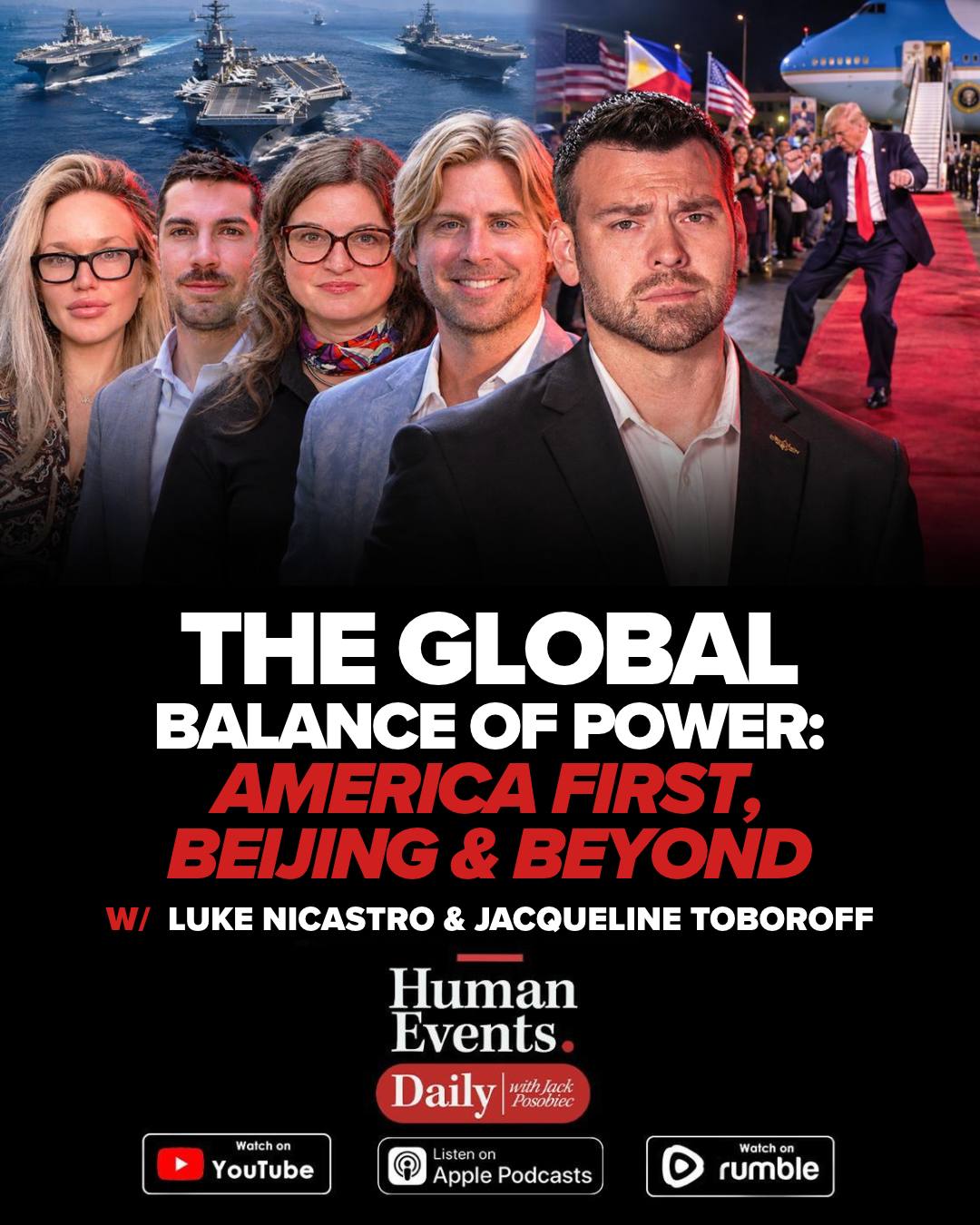
President Donald Trump began his Asia trip in Manila, Philippines, where musicians and dancers greeted him on arrival. He met with leaders of the Association of Southeast Asian Nations at their summit in Manila, ahead of scheduled talks in China.
In Manila, Trump signed a trade agreement under which Thailand would remove all tariffs on U.S. goods and agricultural products. Vietnam had approached Washington earlier in the tariff dispute with an offer to remove all of its tariffs, with the prospect of lower U.S. tariffs on Vietnamese goods in return.
Trump also met briefly with the leaders of India, Japan, and Australia, which make up the Quad alongside the United States. The ASEAN and Quad meetings gave Trump an opportunity to strengthen U.S. partnerships before negotiating with China. Russian Foreign Minister Sergey Lavrov held a separate meeting with ASEAN leaders on the sidelines of the Manila summit.
From Manila, Trump was scheduled to travel to Shenzhen, China, for talks with Chinese President Xi Jinping. Trump and Xi were then due to meet with Russian President Vladimir Putin on Thursday on the sidelines of the Asia-Pacific Economic Cooperation summit. Denuclearization was the official focus, and Trump said before leaving Washington that he would also raise Iran, trade, and Russia’s war with Ukraine.
Iran came up in Manila before the scheduled Shenzhen talks. U.S. intelligence indicated that Tehran might be planning a radiological attack in Washington, D.C., targeting senior Trump administration officials. Iran’s Foreign Ministry called the allegation a fabricated media narrative. Trump said he was taking it seriously and warned of severe consequences if the plot proved real.
The United States and Iran had been negotiating when the war began. A later effort to reach a settlement produced a memorandum of understanding signed in Islamabad in June, but the agreement collapsed and the conflict remained unresolved.
Vice President JD Vance said U.S. operations had destroyed Iran’s nuclear program and conventional military. He said Trump could end operations or put more military and diplomatic pressure on Tehran to obtain a resolution. Vance had also argued after the midterm elections that the war was a major factor in Republican losses.
As the administration weighed those options, the USS Theodore Roosevelt reportedly joined two U.S. carrier strike groups already in the Middle East, bringing the reported total to three. The purpose of the deployment remained unclear. The total could return to two if a carrier already in the region left its station.
New York City Mayor Zohran Mamdani announced Monday that he would disband the New York Police Department’s Strategic Response Group, a unit that handles protests, riots, and counterterrorism. He said replacing it with a civilian agency would help New Yorkers exercise their rights under the First Amendment.
The unit had been on standby for a fraction of the city’s demonstrations. New York City saw nearly 4,500 protests in the previous year, or about 12 per day. The Strategic Response Group reportedly stood by for 245 of them.
Emergency access became an issue during a permitted 2003 march involving the Transit Workers Union against President George W. Bush’s war in Iraq. Demonstrators blocked New York City’s 59th Street Bridge while ambulances and fire trucks were trying to get through. Mounted police moved demonstrators into gated areas and cleared the streets.
Police faced a different kind of emergency at a March protest outside Gracie Mansion. In an incident characterized as ISIS-inspired, two teenagers from Pennsylvania threw explosive devices that failed to detonate. Officers tackled the teenagers at the scene.
FINAL WORD
Iran’s place on the Shenzhen agenda brought an unresolved war into talks that already covered trade, denuclearization, and Russia’s war with Ukraine. The alleged plot in Washington added a domestic security question to the administration’s decisions about negotiations and military pressure abroad, while the incident at Gracie Mansion showed how a threat could arise during a public gathering. As national leaders weighed how to contain the conflict, New York City faced its own decision about who would protect the right to protest, keep routes open for emergency crews, and respond when a demonstration turned dangerous.
On today’s episode of Human Events Daily, I break down how President Trump is using a tariff deal with Thailand and meetings with the leaders of India, Japan, and Australia to build leverage before he sits down with Xi Jinping in Shenzhen.