Thanks for signing up for Poso Daily Brief. You will be receiving a newsletter Monday through Friday.
Subscribe
Oct 1, 2026 | Poso Daily Brief
1 OCT 26 SITREP
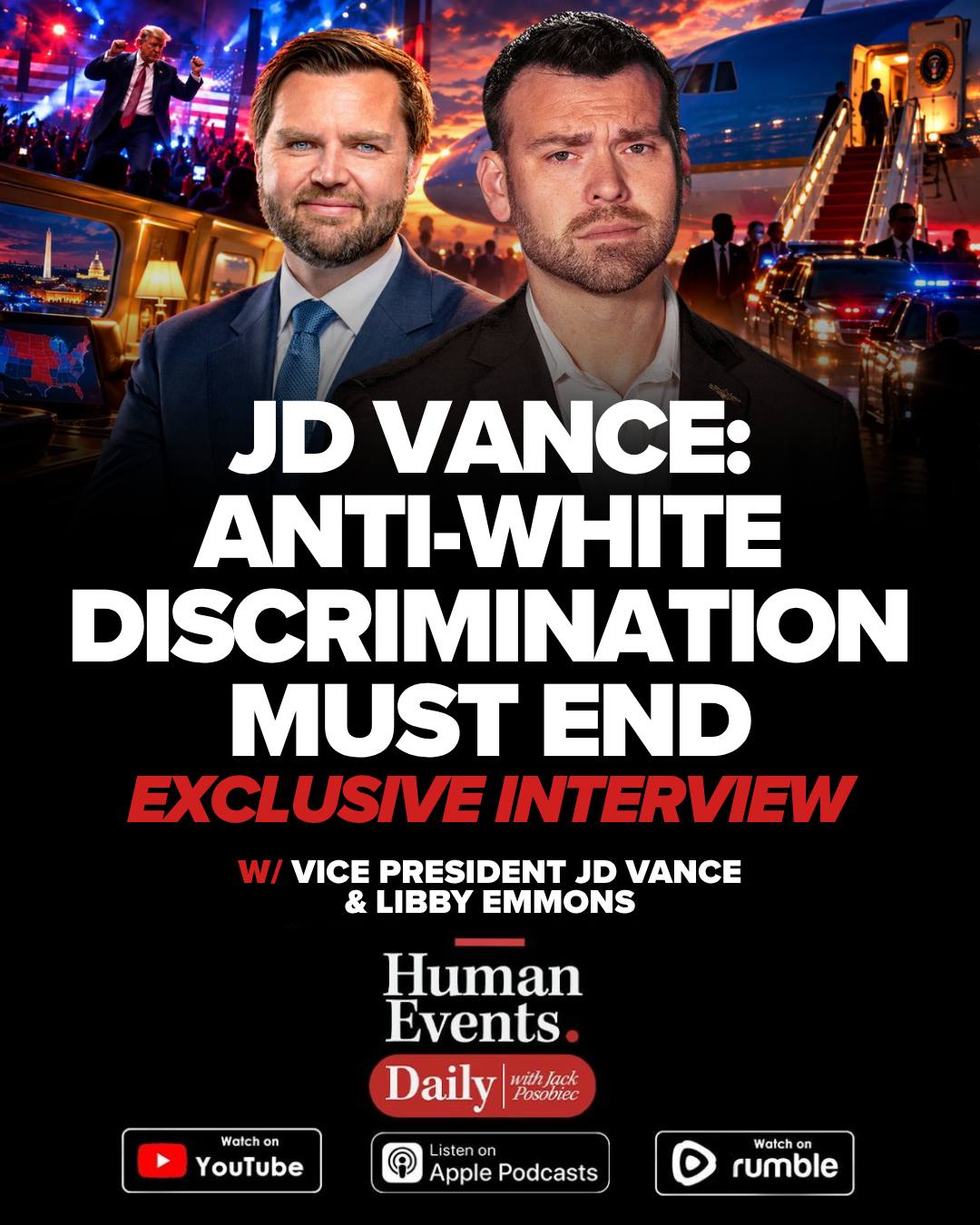
1. 1. JD Vance Tells Jack Posobiec He Supports Eliminating H1-B Visas in EXCLUSIVE Interview
In an exclusive interview aboard Air Force 2, Jack Posobiec spoke with Vice President JD Vance about the effects of the H-1B visa program on American workers and the Trump administration’s efforts to change the program; Vance said he believes H-1B is completely broken and would support eliminating it altogether.
Vance said the United States had experienced 40 years of presidents offshoring jobs and importing cheap foreign labor, arguing that reversing decades of globalization and American jobs moving overseas would take time; he said the Trump administration had made significant progress but acknowledged that everything damaged over 40 years could not be repaired within 18 months and that concerns from American workers could not be ignored.
Vance said the H-1B program had been taken advantage of not only by technology companies but also by accounting firms and other employers that he accused of defrauding American workers; he contrasted bringing an exceptionally talented person into the United States with bringing in an accountant earning $45,000 per year to replace an American accountant earning $60,000 per year, which he characterized as destroying American jobs rather than recruiting extraordinary talent.
Vance said the Trump administration had done more on H-1B visas than any previous administration and pointed to its attempted $100,000 fee for businesses seeking workers through the program; he said Congress would ultimately have to fix or eliminate H-1B, while the administration would continue trying to make the existing program less fraudulent and protect American workers.
2. Race, Sex, And Merit-Based Institutional Policies
Following the discussion of H-1B visas, young men, and pressures in the labor market, Vance argued that anti-white and anti-male discrimination had been institutionalized in the United States and pointed to job applications, college applications, government policies, university admissions, and private corporate practices as areas where he believed people had been treated differently based on race or sex.
Vance specifically contrasted those practices with the Trump administration’s stated position that Black and white Americans should not face discrimination based on skin color; he said universities were being told that they could not discriminate against white men or other applicants and framed the administration’s objective as eliminating discriminatory treatment rather than establishing advantages for another racial or sex-based group.
DEI practices were identified at Ivy League universities, Fortune 500 companies, college preparatory schools, and elementary schools, including classroom privilege walks in which students moved forward based on family circumstances, vacations, or whether their fathers were present in the home; these practices were criticized for dividing children according to race, sex, family background, and perceived privilege rather than individual merit.
Racial and gender quotas were rejected in favor of merit, ability, and individual performance; Hillary Clinton’s comments about a past world dominated by white men of a particular persuasion, religion, viewpoint, and ideology were cited during the discussion of race and sex in public life, while a level playing field without institutional preferences based on skin color or gender was presented as the alternative.
3. Brownsville Shipyard And American Reindustrialization
As part of his trip to Texas yesterday, Vance traveled to Brownsville, near the Mexican border, to conduct a site visit at a new shipyard referred to as Port Alpha that is being developed to manufacture autonomous vessels for the United States Navy and potentially for commercial use; Vance said the facility is intended to become one of the largest and most technologically advanced shipbuilding operations in the world.
Vance said the United States had not opened a new shipyard in about 80 years and connected the Brownsville construction to President Donald Trump’s agenda of reindustrializing the country, expanding domestic manufacturing, and reversing decades in which American jobs and production were moved overseas; he said manufacturing expansion requires years of capital investment and construction rather than producing immediate results.
Vance said the administration was about 18 months into its effort and pointed to trillions of dollars in new investment, a broader construction boom, and the Brownsville shipyard as evidence of domestic industrial activity; he tied that development to rebuilding the American middle class and creating jobs for Texans and other American workers, including young men whose economic concerns had become politically significant.
The autonomous vessels planned for the Brownsville shipyard are the same type of unmanned maritime technology already used in a recent Strait of Hormuz rescue, where an autonomous surface vessel traveled into hostile territory without a crew, retrieved a downed American airman, and carried him back toward safer territory, providing a real-world example of the military capabilities behind the shipbuilding project Vance visited.
FINAL WORD
The Brownsville shipyard, H1B changes, and effort to eliminate race- and sex-based preferences reflect the Trump administration’s stated priorities of rebuilding American industry, protecting American workers, and enforcing equal treatment. Trump and Vance connected those goals to bringing production back to the United States, limiting the use of cheaper foreign labor to replace Americans, and removing racial and gender preferences from major institutions. Across industry, immigration, employment, and education, the administration presented these policies as parts of its effort to expand American jobs and make merit the standard for opportunity.