Thanks for signing up for Poso Daily Brief. You will be receiving a newsletter Monday through Friday.
Subscribe
Sep 29, 2026 | Poso Daily Brief
29 SEP 26 SITREP
1. MAHA Summit Push For Rural Health Care And Medicare Access
At the MAHA Summit in Washington, DC, Centers for Medicare & Medicaid Services Administrator Dr. Mehmet Oz said people living in rural America have a life expectancy about 2.6 years shorter than people living in urban America and that the longevity difference between the top quintile and bottom quintile after age 50 is 12 years. Oz connected those differences to limited resources in rural communities, saying people who cannot obtain care where they live do not do as well.
Oz said Congress provided $50 billion for rural health care in 2025, calling it the largest investment ever in rural health care and a 50 percent increase over previous spending on rural care. He said Congress passed the funding, President Donald Trump signed it, and the money is now moving into programs designed to reach people in rural America.
Oz said the $50 billion investment is intended to put more doctors and nurses into rural communities and improve telemedicine so patients can receive care where they live instead of going without treatment. He also raised maternal mortality during the discussion, saying the United States ranks 66 in the world for mortality among mothers having babies.
At the same MAHA Summit, Medicare.gov's new national provider directory was presented as a way for Medicare beneficiaries to find doctors, their phone numbers, their locations, their specialties, and whether they accept Medicare. The system allows beneficiaries to locate an appropriate doctor and make an appointment, connecting federal health technology efforts with the broader push to make medical care easier to access.
2. Trump’s White House AI Strategy And Data Center Community Agreements
President Donald Trump signed an executive order today officially renaming artificial intelligence "super intelligence." Trump said the technology is not artificial and signed the executive order after meeting with technology industry leaders at the White House.
Asked whether AI or "super intelligence" requires guardrails or regulation, Trump said there should be tremendous self-regulation and pointed to the Department of Justice and FBI as existing sources of government regulation. His comments came as lawmakers faced increasing pressure to address the rapid development of AI and concerns surrounding the technology.
Separate MAHA Summit remarks connected AI directly to health care through diagnosis, daily health routines, secure health-data movement, and digital care. Amy Gleason's CMS health technology ecosystem has 900 companies signed up, while the FDA's Tempo pilot and the CMS Access model are intended to advance technology-based care and payment models focused on outcomes, including digital diabetes-prevention efforts tied to reductions in A1C.
Trump said companies developing data centers agreed to work with local communities and could supply oil and gas, support education, help teachers financially, and provide other financial assistance. Trump said communities with data centers have become wealthier and experienced lower taxes, and he said companies could move facilities overseas or to other locations if they cannot develop them in American communities.
3. Backlash Over Arkansas Governor Sarah Huckabee Sanders’ Welfare Ad
Arkansas Governor Sarah Huckabee Sanders faced backlash over an advertisement promoting a welfare work requirement that portrayed a young white man as lazy and unwilling to work. The controversy centered on the decision to use a young white male as the negative example in the advertisement rather than opposition to requiring able-bodied welfare recipients to work.
The dispute reached CNN, where Sanders' advertisement became the focus of an argument over Republican messaging toward Generation Z. Former Trump White House official Caroline Sunshine challenged Republican strategist Brad Todd after Todd dismissed people criticizing the advertisement as "clickbait profiteers."
Sunshine said white men under age 25 account for less than one percent of welfare recipients and questioned why Sanders' advertisement used a young white male as its negative example. The backlash also included criticism that young white men are repeatedly portrayed as lazy, undisciplined, entitled, responsible for social problems, villains, or acceptable targets for ridicule in advertisements and movies.
The controversy expanded into concerns about declining Republican support among Generation Z, low family formation, difficulty buying homes, and Republican messaging toward young white male voters before the 2026 midterms. Critics argued that Republicans risked alienating young white men whose votes they were seeking by using political messaging that portrayed members of that same demographic negatively.
FINAL WORD
The Trump administration is advancing major changes in health care and artificial intelligence while emphasizing access, innovation, and local benefits. Republicans are also confronting how their messaging affects young voters as the 2026 midterms approach. Health policy, emerging technology, and the fight for Generation Z support are becoming key issues in the political battles ahead.
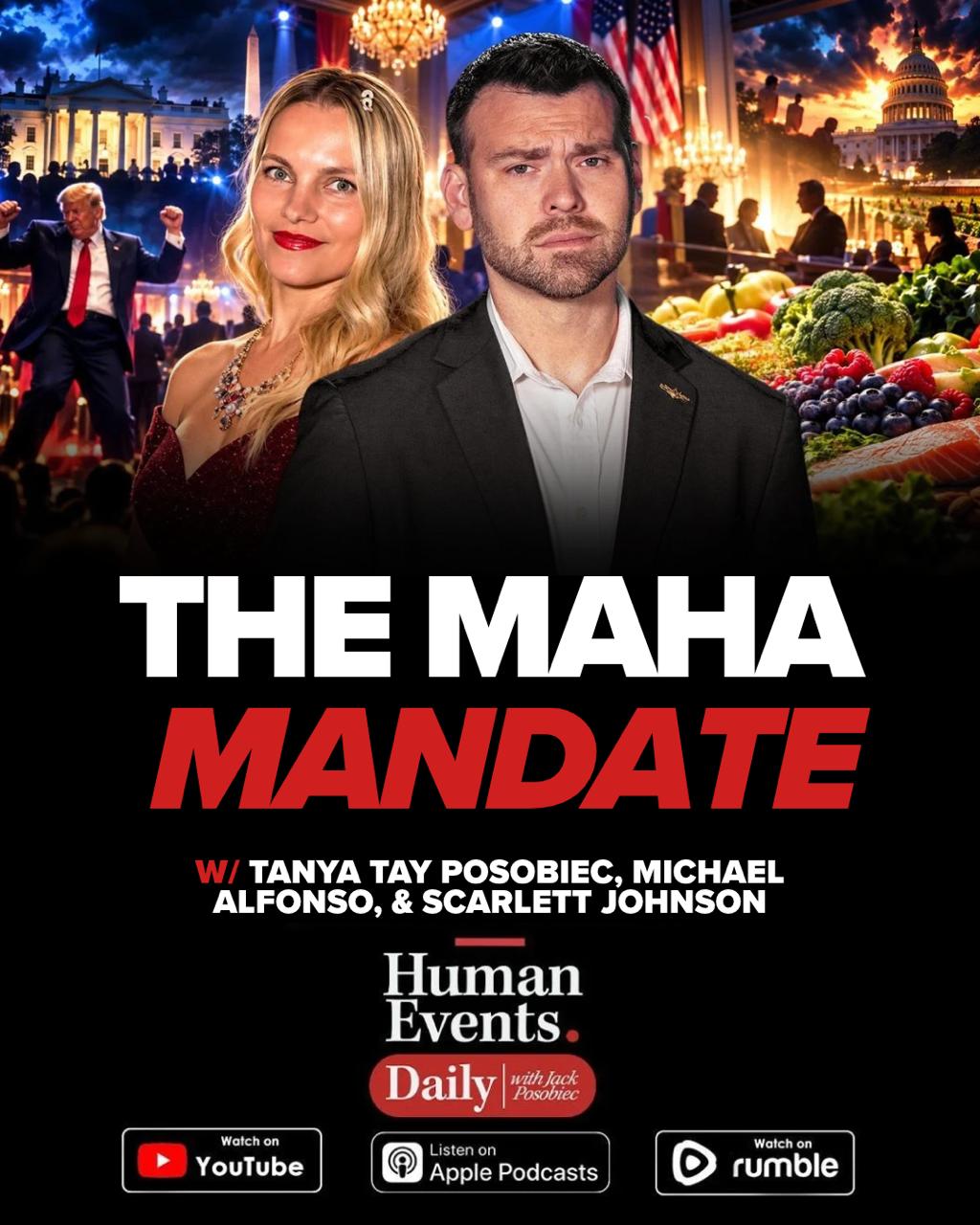
On today's episode of Human Events Daily, I'm coming to you from the MAHA Summit in Washington, DC, where we're covering the push to improve American health, expand rural health care, and bring new technology into the medical system.