Thanks for signing up for Poso Daily Brief. You will be receiving a newsletter Monday through Friday.
Subscribe
Sep 24, 2026 | Poso Daily Brief
24 SEP 26 SITREP
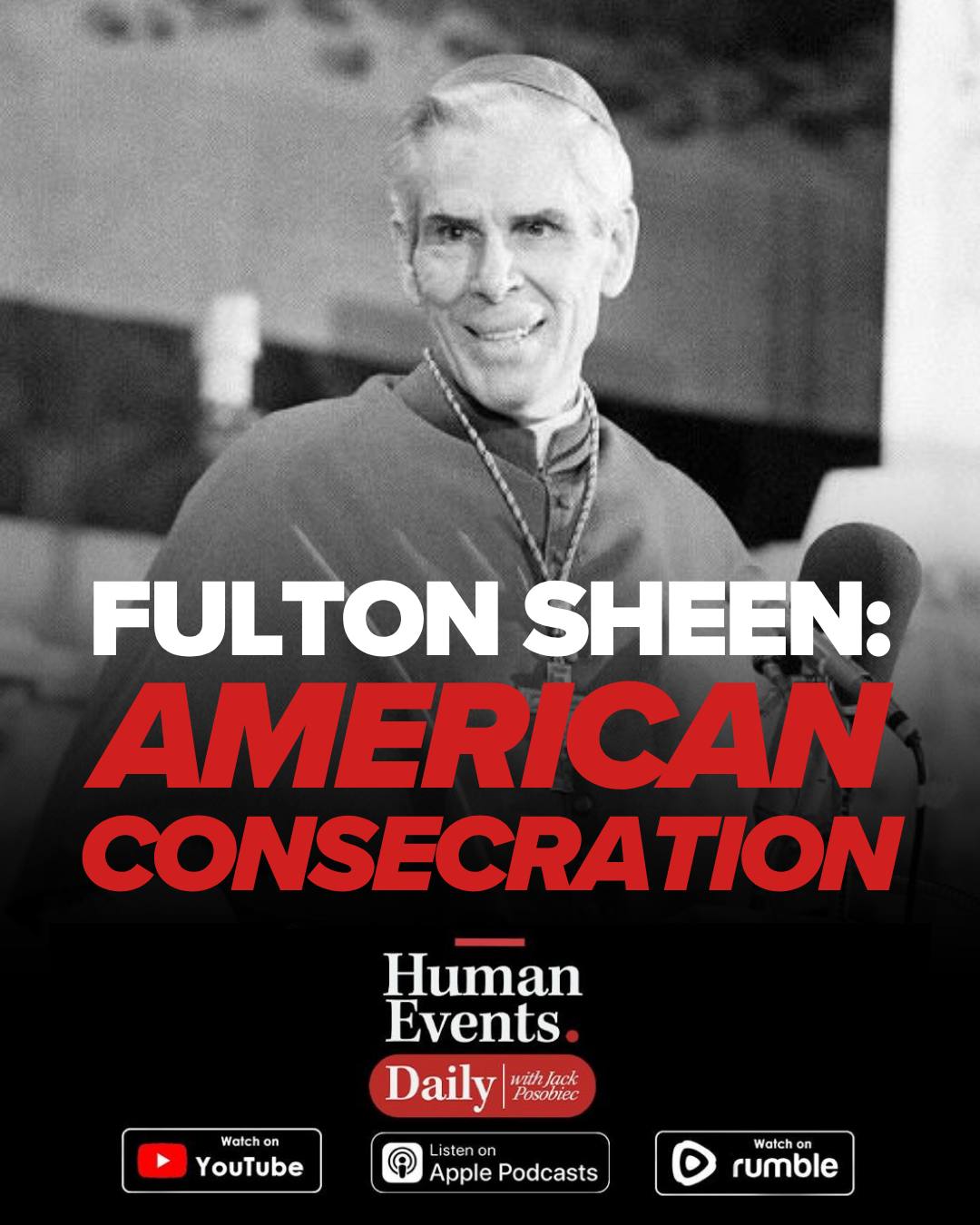
1. Fulton Sheen’s Beatification In St. Louis
Archbishop Fulton J. Sheen was beatified today at the Dome at America’s Center in St. Louis, Missouri, completing the next major stage in the Catholic Church’s process toward sainthood. The beatification followed years of investigation into Sheen’s personal life, theology, and ministry, with the Catholic process requiring an attributed miracle before beatification.
Sheen’s connection to Illinois began near Peoria, and he was ordained a priest at the Cathedral of St. Mary in Peoria in 1919. He later became national director of the Pontifical Mission Societies in the United States and achieved national prominence through radio and television, including “Life Is Worth Living,” reaching an audience of 30 million people.
The miracle associated with Sheen’s beatification involved a child whose heart stopped for 61 minutes before the child survived, with the survival attributed to Sheen’s intercession. The child attended today’s beatification in St. Louis with his family, directly connecting the miracle recognized in Sheen’s cause with the ceremony advancing him toward sainthood.
Tens of thousands of people gathered today at the Dome at America’s Center in St. Louis, Missouri, for Fulton Sheen’s beatification. Bishops, archbishops, priests, deacons, nuns, lay attendees, and a delegation from Pope Leo were present; attendees also participated in confession and adoration before the procession of acolytes entered the Dome for the beatification Mass.
2. The End Of Christendom: Sheen’s Warning
Sheen taught that rights and liberties including freedom of the press, freedom of conscience, and freedom of association come from God rather than government, the will of a political majority, the state, or a political party. He argued that because government is not the source of those rights, the state cannot legitimately take them away.
Sheen contrasted that principle with political systems in which the party becomes supreme. He argued that such a system must deny God because acknowledging God would establish an independent source of rights beyond the party, while defining rights as grants from the party would give that party the power to withdraw them.
Sheen addressed what he called the “end of Christendom” as Christianity’s influence over public life weakened during the cultural changes associated with the 1950s, 1960s, and 1970s. Catholic author and former Los Angeles sheriff Jesse Romero explained the distinction as the end of Christianity’s former influence over politics and culture rather than the end of Christianity itself.
Sheen also confronted violence and the destruction of institutions, specifically invoking demands against police, churches, teachers, and government. He asked whether anything could be built “down” and instead called for movement “up” from violence and destruction toward God, making institutional construction rather than destruction part of his religious message.
3. Gen Z Rediscovers Fulton Sheen
Gen Z attendees were prominently represented at today’s beatification in St. Louis, including young men who traveled from Detroit after growing up watching Sheen’s videos. Their clothing carried references including “Life Is Worth Living,” “Blessed Fulton Sheen,” and “J.M.J.,” reflecting the continued circulation of Sheen’s work decades after his original broadcasts.
Sheen’s material has gained renewed circulation through contemporary social media and has reached audiences beyond Catholics, including Protestants, while Elon Musk recently shared Sheen-related material. That online circulation has introduced younger audiences to a religious communicator who originally used radio and prime-time television to reach 30 million people.
Young Catholic men attending today’s event connected Sheen’s appeal specifically to masculinity, the Gospel, and Catholic Church teaching. They said pressure from society, families, and friends encourages young men to conform to contemporary norms, while Sheen’s example gives them confidence to embrace masculinity according to the Bible and church teaching without being afraid of those convictions.
The young men also emphasized Sheen’s authoritative public presentation of Christianity and his refusal to compromise his religious principles. They expressed a desire for young Catholic men leaving today’s event to practice their religion publicly without shame or apology, connecting Sheen’s example with a broader “build it up” emphasis on religious commitment and institution-building rather than cultural destruction.
FINAL WORD
Today’s beatification in St. Louis placed Fulton Sheen’s legacy before a new generation at a moment of renewed interest in his public expression of Christianity. His teachings linked religious faith with individual rights, moral authority, and the preservation rather than destruction of institutions. The strong Gen Z presence showed how Sheen’s decades-old message continues to find an audience through modern media and contemporary Catholic life.