Thanks for signing up for Poso Daily Brief. You will be receiving a newsletter Monday through Friday.
Subscribe
Sep 21, 2026 | Poso Daily Brief
21 SEP 26
1. Western Demographic Change And Remigration Policy
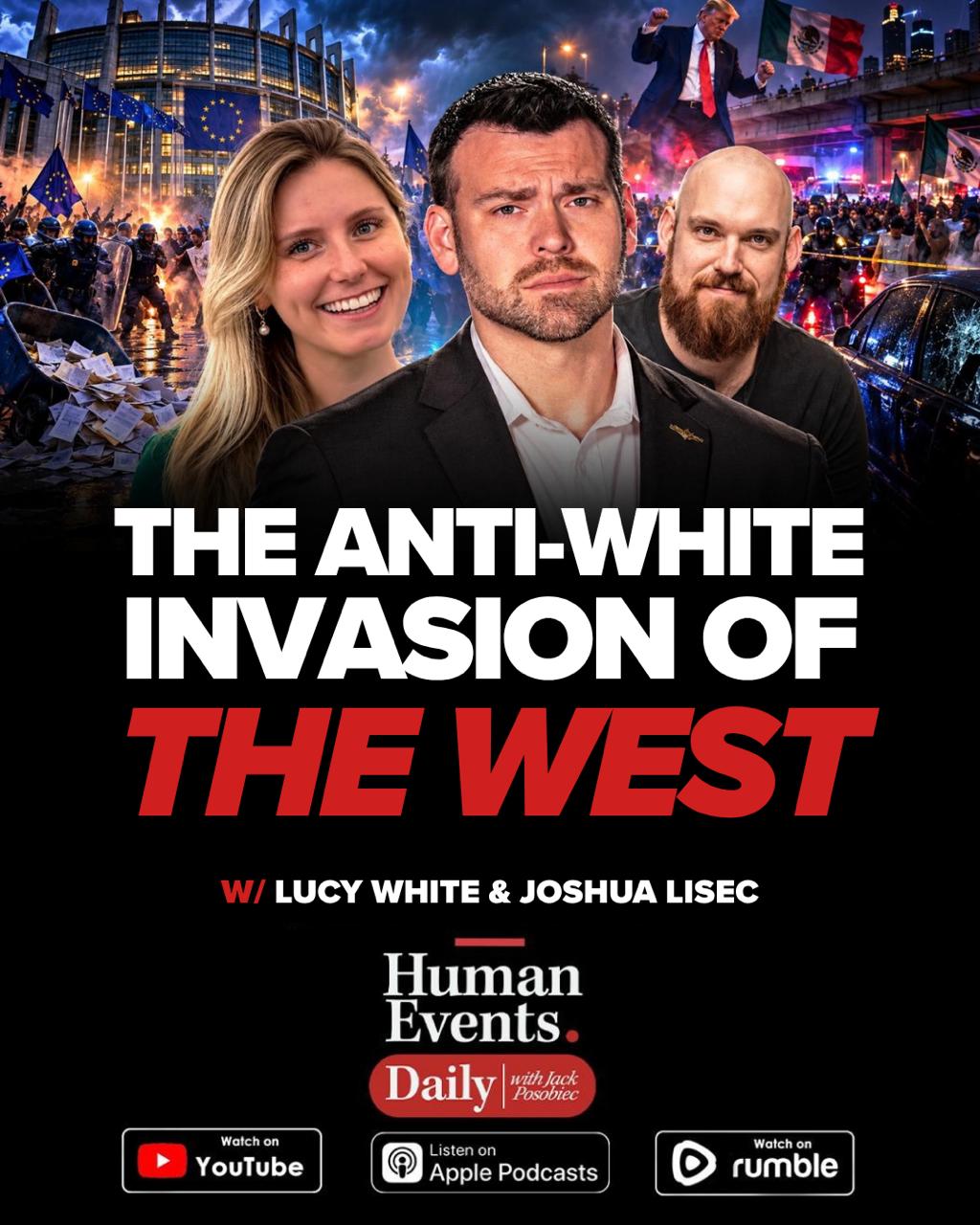
Lucy White, the British representative for the Save Europe Act and a fellow with the White Paper Policy Institute, presented demographic change in the United States as a central justification for remigration policy, stating that white Americans represented 85 percent of the population in 1965, had declined to 54 percent, and were projected to become a minority by 2043; she attributed the change to millions of legal and illegal migrants entering the country and argued that immigration should first be stopped before mandatory and voluntary remigration policies are implemented.
White defined mandatory remigration as forcibly sending people home or removing their visas and voluntary remigration as encouraging people considered ineligible to remain to return to their countries of origin; she compared immigration to an overflowing bathtub, arguing that governments must first stop additional immigration and then reduce the existing migrant population, and said remigration needed to occur before demographic change made such policies difficult to implement democratically.
In the United Kingdom, White identified major periods of immigration beginning in 1948 with the Windrush generation arriving from Jamaica and the passage of the British Nationality Act, followed by another major period beginning under Tony Blair in 1997 and the later “Boris Wave” associated with Boris Johnson and subsequent prime ministers including Rishi Sunak; she stated that approximately five million migrants arrived over five years, with 85 percent coming from Third World countries and India, Pakistan and Nigeria serving as the predominant countries of origin.
White stated that the United Kingdom grants an average of 737 British citizenships each day and identified Indians, Pakistanis and Nigerians as the leading nationalities receiving citizenship; she also stated that white British people constituted approximately 34 percent of London’s population and criticized MI5 and MI6 summer internship eligibility rules that she said prevented white applicants from applying while reserving those entry opportunities for black and Asian minority candidates.
2. Austin Immigration Enforcement And Anti-ICE Mobilization
Protesters gathered in Austin, Texas, after an Immigration and Customs Enforcement officer shot and wounded Venezuelan man Wilber Perez during an immigration-enforcement incident; Perez was an illegal immigrant facing deportation, while news headlines emphasized that he had been delivering food when he was shot and that he had a bullet in his back.
Joshua Lisec, co-author of Unhumans, criticized headlines about the Austin shooting for focusing on Wilber Perez delivering food and being shot in the back while omitting his status as an illegal immigrant scheduled for deportation; Lisec called this presentation “mal information,” which he defined as using individually accurate details while excluding information he considered necessary to understand why the incident occurred.
Lisec said anti-Immigration and Customs Enforcement networks could mobilize hundreds or thousands of protesters carrying foreign flags in American cities; he pointed to anti-Immigration and Customs Enforcement riots dating to January 2026 and said “ICE watch” networks operate inside the United States alongside socialist and Islamist networks to oppose federal immigration-enforcement and deportation operations.
Lisec said anti-Immigration and Customs Enforcement activists, socialist activists, Democratic socialists, pro-Islam influences and anti-Trump groups could align despite differences between them; he also said some people could attend protests because they could not afford housing in desirable parts of Austin, experienced rent increases or could not find employment, with those grievances bringing them into the same political alignment as groups opposing Immigration and Customs Enforcement.
3. White House Press Access And Parallel Media Institutions
CNN, MS Now and Politico said they were suing the Trump administration after President Trump barred them from reporting on White House grounds; staff members from the affected outlets arrived for work on Saturday morning, were denied entry to the White House and had their press passes confiscated.
The press-access dispute affected coverage of President Trump’s travel today from Joint Base Andrews to New York City for United Nations week because the customary White House television pool normally provides a shared camera feed for presidential coverage; after CNN lost its press pass, other media organizations declined to perform the pool-camera assignment in solidarity with CNN, and the television pool announced that it would not cover events designated as pool coverage of the president.
Real America’s Voice remained the television outlet scheduled to travel with President Trump to New York City and provided footage of Marine One arriving at Joint Base Andrews and Trump proceeding to Air Force One; Politico reported that no replacement had been placed into CNN’s assigned pool role and that Real America’s Voice was the only scheduled television outlet traveling with Trump, while Real America’s Voice said other media organizations could contact the network for access to its footage.
Joshua Lisec called Real America’s Voice part of a group of populist parallel institutions built outside major media organizations and named Turning Point USA as another counter institution for young conservatives; the established media had traditionally served as the principal conduit between the president and the public, but things are now starting to change.
FINAL WORD
Demographic change and remigration proposals put immigration, citizenship and national identity at the center of debate in the United States and United Kingdom. The Austin shooting of Wilber Perez underscored the resistance facing Trump’s immigration crackdown, while the White House press dispute showed traditional media outlets losing their exclusive hold on presidential coverage. Together, these stories capture a political fight over immigration, enforcement and media power as the Trump administration pushes ahead with its agenda.