Thanks for signing up for Poso Daily Brief. You will be receiving a newsletter Monday through Friday.
Subscribe
Apr 8, 2026 | Poso Daily Brief
8 APR 26 SITREP
1. US-Iran-Israel Ceasefire And Strait Of Hormuz Developments
A US-Iran ceasefire has begun after 38 days of joint US-Israeli military operations known as Operation Epic Fury, with President Trump announcing a temporary halt in US attacks for two weeks and Iran agreeing to reopen the Strait of Hormuz.
Pakistan brokered the agreement after delays, with the US previously setting an 8 p.m. Eastern deadline threatening strikes on Iranian power plants, bridges, and infrastructure if the strait remained closed.
Iran had previously restricted the Strait of Hormuz and imposed tolls on passing ships, requiring payment in Chinese yuan rather than US dollars, directly impacting global oil flows and currency systems.
Israeli Prime Minister Benjamin Netanyahu publicly confirmed support for suspending strikes while maintaining the objective of eliminating Iran’s nuclear missile and terror threat to Israel, the United States, and Arab neighbors.
2. China, Energy Flows, And Global Power Competition
Iranian oil exports primarily flow to China rather than the United States or Europe, making China a central stakeholder in the conflict and a key actor in facilitating negotiations to end hostilities.
China, alongside Russia, India, and BRICS nations, is positioned in opposition to the US-led Western alliance including NATO and Israel, with competition centered on control of global economic systems and energy supply chains.
Chinese involvement includes coordination with Pakistan in ceasefire negotiations and upcoming high-level diplomacy, including a planned meeting between President Trump and Xi Jinping on 5/14 in Beijing.
The use of Chinese yuan for oil transit payments in the Strait of Hormuz challenges the petrodollar system and signals broader shifts in global financial influence tied to energy distribution.
3. Taiwan Strait, Alliances, And Strategic Military Positioning
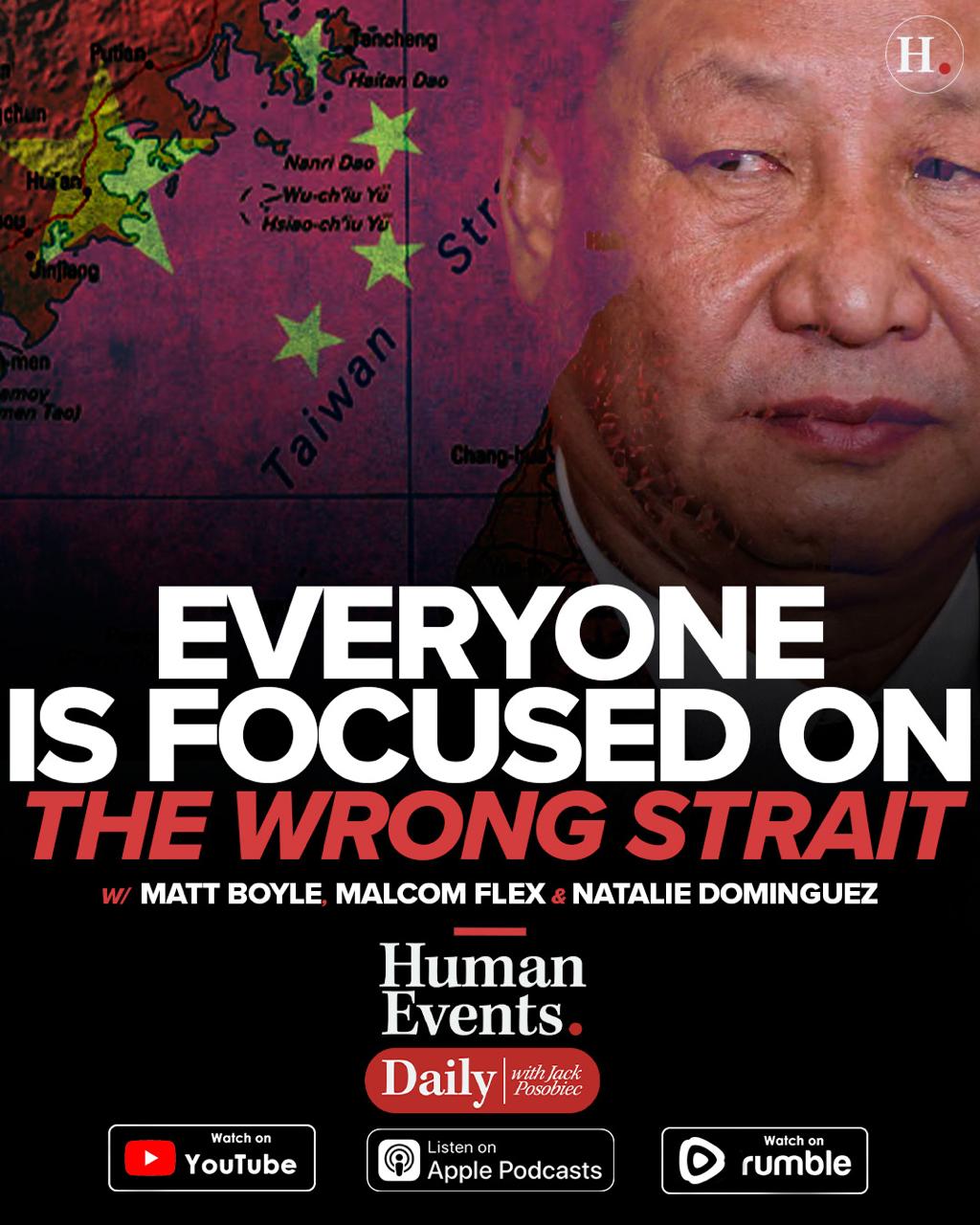
The Taiwan Strait is identified as a critical geopolitical flashpoint, with control over the South China Sea and Taiwan Strait enabling dominance over global shipping routes, trade flows, and naval movement.
Taiwan’s opposition leader from the Kuomintang party is in China meeting Xi Jinping, highlighting internal political divisions between pro-China and pro-West factions within Taiwan.
The United States is pursuing regional alliance strengthening with Japan, India, Australia, the Philippines, and South Korea, including calls for Japanese remilitarization and expansion of the Japanese Navy to counter China.
Taiwan’s semiconductor industry underpins global technology supply chains, including smartphones and AI systems, making control of Taiwan economically decisive and tied to potential large-scale financial conflict.
FINAL WORD
The ceasefire in the Middle East, China’s role in energy markets, and tensions in the Taiwan Strait collectively demonstrate a convergence of military, economic, and geopolitical power struggles across regions. These developments link control of physical trade routes, currency systems, and technological supply chains to broader competition between global alliances. The interactions across these theaters reflect an interconnected contest over influence spanning energy infrastructure, financial systems, and strategic military positioning.
On today's episode of Human Events Daily, everyone thinks the Strait of Hormuz is what's important right now. But we're looking at the wrong straight. The real strait to be looking at right now is the Taiwan Strait. And what is going on right now with the Taiwan Strait is inextricably linked to what we see happening vis-a-vis the Strait of Hormuz.