Thanks for signing up for Poso Daily Brief. You will be receiving a newsletter Monday through Friday.
Subscribe
Mar 30, 2026 | Poso Daily Brief
30 MAR 26 SITREP
1. No Kings Protests In The United States Included “Death To America” Chants
“No Kings” protestsoccurred across the country over the weekend featuring chants that included “death to America” and “death to Israel,” with participants expressing opposition to U.S. involvement in the Iran conflict and to Immigration and Customs Enforcement operations.
Individuals at the Philadelphia protest, in particular, physically confronted a reporter by pushing, spitting, blocking movement, and following the individual to prevent documentation of protest activity.
Overall, protest participation included alignment between leftist activists, pro-Palestinian demonstrators, and Islamist sympathizers, forming a combined presence centered on anti-Israel and anti-U.S. messaging.
Demonstrators used costumes and inflatable outfits to create a festival-like appearance while some individuals simultaneously held objects such as rocks intended for potential use against law enforcement vehicles, indicating preparation for violence.
2. Iranian Missile Attacks And Civilian Impact In Israel
Iran conducted 7+ ballistic missile barrages over a 72 hour period using small salvo tactics to conserve inventory while maintaining pressure on Israeli territory.
Missile impacts occurred near Beersheba with 20+ direct hits in residential areas. 11 individuals were injured and surrounding infrastructure sustained damage.
A strike on the Adama chemical plant caused a fire and led to the creation of an 800 meter exclusion zone. The IRGC confirmed the strike as retaliation.
Explosions in Tel Aviv and Savion damaged homes and commercial properties including a bicycle shop. Additional reports confirmed 2 rounds of ballistic missiles striking Tel Aviv with active air raid sirens.
3. United States Naval Deployment And Strait Of Hormuz Operations
The USS Gerald R. Ford relocated from Suda Bay near Crete to Croatia after a fire disabled 600 berths. Approximately 600 sailors lost living quarters and personal belongings during the incident.
The USS George W. Bush carrier group moved into position to reinforce U.S. naval presence in the region. This deployment supported ongoing operations tied to the Strait of Hormuz.
U.S. naval forces conducted mine detection and clearance preparation operations in the Strait of Hormuz. No confirmed naval mines were identified despite initial concerns about Iranian mining activity.
U.S. forces prioritized securing the Strait of Hormuz by neutralizing aerial and drone threats before initiating full mine-clearing operations. Naval strategy focused on maintaining safe maritime transit routes.
FINAL WORD
Domestic protests, international missile strikes, and naval operations demonstrate simultaneous pressure across internal political environments and external military theaters. Actions within U.S. cities intersect with overseas conflict dynamics, showing how public unrest and foreign policy are linked within the same strategic framework. Together, these developments reflect a system where domestic movements, regional warfare, and global maritime security operate in parallel and influence one another.
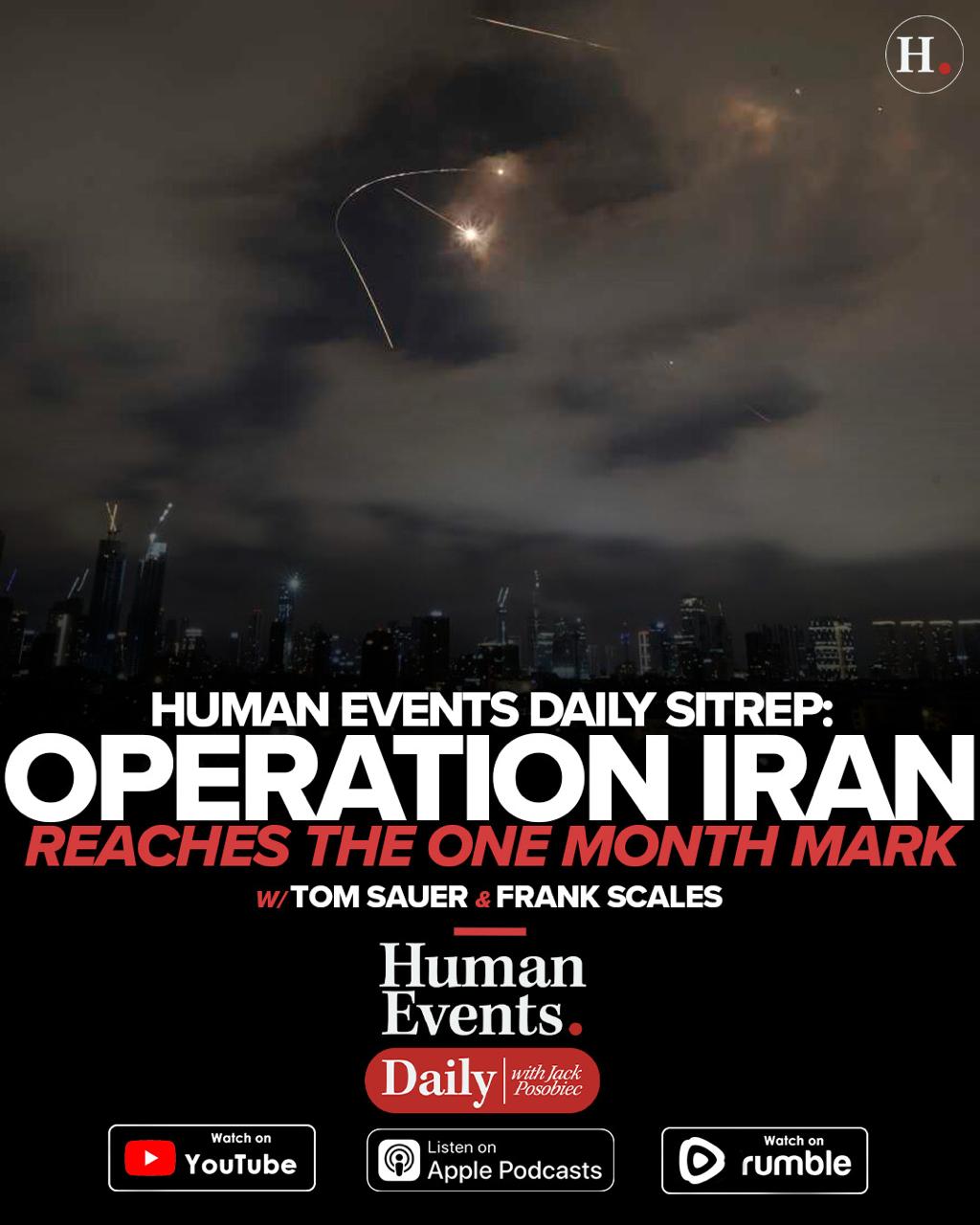
On today's episode of Human Events Daily, it's been officially one month of Operation Iran. And as of late, Israeli's combined air force campaign has continued to degrade Iranian missile production, launch infrastructure, defense industry, and even select sites related to their nuclear program.