Thanks for signing up for Poso Daily Brief. You will be receiving a newsletter Monday through Friday.
Subscribe
Mar 24, 2026 | Poso Daily Brief
24 MAR 26 SITREP
1. Iran-Israel Military Escalation And Regional Conflict Dynamics
Iranian ballistic missiles and cluster munitions struck civilian areas in Tel Aviv and other locations in Israel, with impacts reported near the Dimona nuclear area in the Negev desert and repeated penetrations of Israeli air defenses.
Israeli strikes targeted locations near Iran’s Bashir nuclear reactor and Natanz nuclear research center, triggering reciprocal attacks on energy infrastructure, refineries, and gas-related assets across both sides.
Iran sustained missile operations using underground “missile cities” and hardened mountainous terrain facilities, maintaining strike capability despite degraded military capacity and earlier assessments of missile depletion.
The Strait of Hormuz remained under Iranian blockade, with threats issued against United States energy infrastructure and continued missile attacks extending to UAE, Qatar, Saudi Arabia, Kuwait, and Bahrain.
2. United States Military Operations And Strategic Positioning
United States forces deployed two Marine Expeditionary Units from USS Boxer LHA and USS Tripoli toward the Persian Gulf, while the 82nd Airborne Division was reportedly called up amid potential operations near the Strait of Hormuz and Kharg Island.
United States and allied air campaigns operated over Tehran, eliminating Iranian naval and air force capabilities, destroying approximately 82 percent of missile launchers, and conducting strikes against leadership targets.
United States missile defense systems intercepted 101 Iranian missiles targeting the aircraft carrier USS Abraham Lincoln, with all projectiles destroyed before impact in the surrounding sea.
Planned United States strikes included potential destruction of a major Iranian electric generation plant, while prior B-2 bomber operations eliminated key nuclear infrastructure access points and degraded enrichment capabilities.
3. Department Of Homeland Security Workforce And Funding Disruptions
Department of Homeland Security employees, including TSA personnel, worked for 30 days without pay due to a lapse in federal funding caused by congressional budget disputes in Washington, D.C.
TSA agents were reported staying home in some instances because of financial strain from missed paychecks, affecting airport staffing and security operations.
Senate negotiations were ongoing to restore DHS funding, with proposals involving partial reopening of the department and disagreements over inclusion of ICE enforcement funding.
The funding lapse resulted from a breakdown in agreements between political parties in Congress, halting payments while DHS personnel continued performing homeland security duties.
FINAL WORD
The military escalation between Iran and Israel, combined with United States operational dominance, demonstrates how regional conflict directly drives strategic military deployments and high-risk engagements. At the same time, domestic funding disruptions within the Department of Homeland Security reveal internal governance strains affecting national security operations at home. Together, these developments show how external conflict pressures and internal institutional challenges intersect across military, political, and security systems.
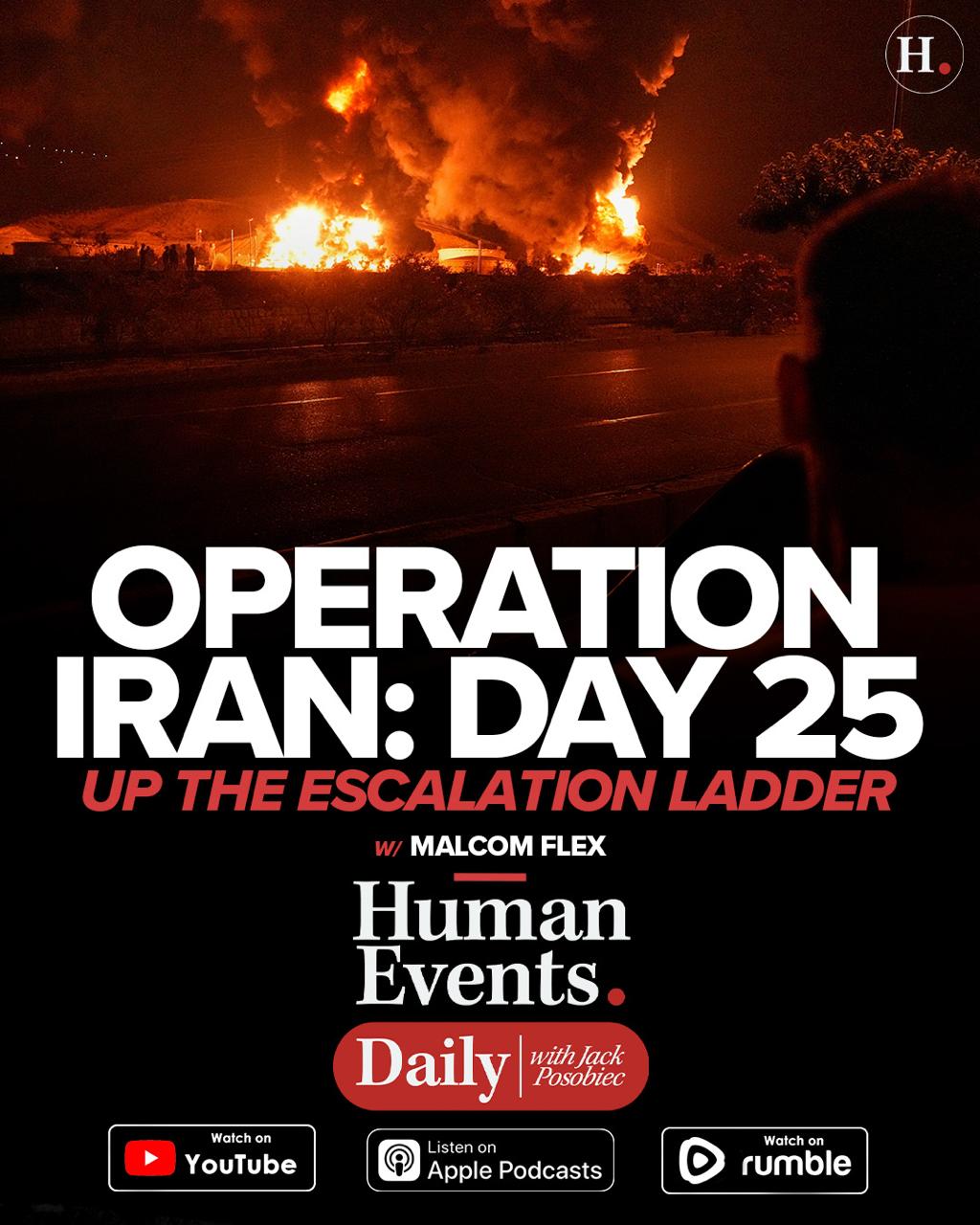
On today's episode of Human Events Daily, it's day 25 of Operation Iran. We've been talking about moving up the escalation ladder. We are seeing the situation on the ground continue to continue to play out and of course seeing more and more strikes from Iran hitting into Israel and making their way through Israeli air defense.